Ritual child sacrifice
Ofrenda a la tormentaRitual child sacrifice is the cult practice at the heart of the novel’s most disturbing shift in the investigation: what first appears to be the use of children’s remains in grave desecrations is connected to an attempt to kill Amaia Salazar’s son. The practice is presented through the beliefs of its adherents and the evidence Amaia uncovers, not as proof that supernatural forces exist. Its rules make a child’s age, baptismal status, death, and body part of a prescribed offering.
Definition and Ritual Logic
Amaia’s suspicion takes shape around two stark clues: a small, empty white coffin whose missing body has been replaced with packets of sugar, and the word sacrifice. When she asks Elena whether the group carried out a human sacrifice, Elena trembles and tries to deny it. She reasons that Rosario was the only pregnant woman in the group and that Amaia is alive, as if the survival of Amaia’s son disproves the possibility of an earlier intention. Her fear, however, makes the denial uncertain; the empty coffin gives Amaia a physical reason to keep asking.
The photograph of a cave where Berasategui and Rosario had prepared to kill Amaia’s son changes the scale of the inquiry. Amaia suspects that the conspicuous Tarttalo murders and the desecration of graves are distractions from a more important connection: the use of her family’s children’s bones and the intended killing of her son. Sarasola identifies the cave as the setting for a human sacrifice, describing the act as both witchcraft and an offering to evil. His interpretation links the attempted killing to the desecrated remains at Arizkun, where children’s bones had been used in ritual practice; he distinguishes the use of human remains as ritual objects from killing a child as what he calls the greatest offering to evil.
In the account given by a cult participant, the ritual had specific conditions. The victim was to be a girl under two years old and unbaptized. The child was to be deprived of air in imitation of Inguma, and the body was then to be surrendered as an offering. Baptism was excluded because the participant understood it as an offering and commitment to another god. The rules thus treated both the manner of death and the child’s religious status as elements of the rite, while the body itself was made to serve its purpose after death.
The Child as a Ritual посредник
Sarasola explains the age limit through a belief in transition: from birth until the second birthday, a child is thought in many cultures to move between two worlds and to be able to perceive both. That liminal status makes the child, in the cult’s scheme, a vehicle for communicating with spiritual worlds or obtaining answers to petitions. He also gives the belief a developmental account: before language emerges, children learn instinctively through standing, walking, grasping, and imitation; the growth of speech marks a crossing into a different relation with their surroundings. Older children may still be considered useful, particularly before puberty, but are no longer regarded as equally effective intermediaries. The cult participant similarly describes the soul as being in transition until age two, while noting that the deaths of infants were easier to justify than those of adolescents.
The child’s body was not incidental to the rite but its most valued material. Sarasola describes the killing of a child under two, most commonly by bleeding, and mentions cases of dismemberment so that parts could be used separately. Skulls were especially prized, as were long bones, including the Mairu-beso bones found in the desecration at Arizkun; teeth, nails, hair, and powder made from small bones could also be used. He distinguishes these practices from the sacrifice itself: human remains could function as ritual objects, but killing a child was, in his account, the greatest offering to evil. The distinction helps explain why the grave desecrations and the attempted killing of Amaia’s son belong to the same investigation without being identical acts.
The ritual’s setting also depends on the beliefs attributed to its practitioners. Sarasola says that human remains may be used in traditions that summon deities or the spirits of the dead, and that a sacred place may be chosen precisely in order to profane it. He cautions against treating witchcraft as interchangeable with Satanism: although the two may seem connected, witchcraft need not aim to honor the devil by offending God. In the Baztán Valley, however, he places the Arizkun desecrations within a local history of witchcraft in which Aker, the demon, was invoked. This reading makes the profaned grave more than a hidden ritual site; it becomes a point where the cult’s use of the dead intersects with the valley’s older religious traditions.
Repetition, Group Rules, and Human Cost
Sarasola places the cult’s beliefs against a longer, contested history rather than treating them as an isolated modern invention. He recalls how, during the witch trials, the inquisitor Salazar y Frías investigated claims of the Malignant One’s presence in the valley and spent more than a year living among its inhabitants. His inquiry led him to regard older magical practices as deeply rooted in local culture, intertwined with Christianity rather than simply displaced by it. Among the cases recorded in depositions were unresolved crimes against children under two and adolescent girls, followed by the disappearance of their bodies. Once the Inquisition’s own abuses were acknowledged, those accounts were dismissed wholesale as false. The novel therefore sets the cult’s present-day violence beside a historical record in which real crimes may have been obscured by coercion and by the later rejection of testimony as a whole.
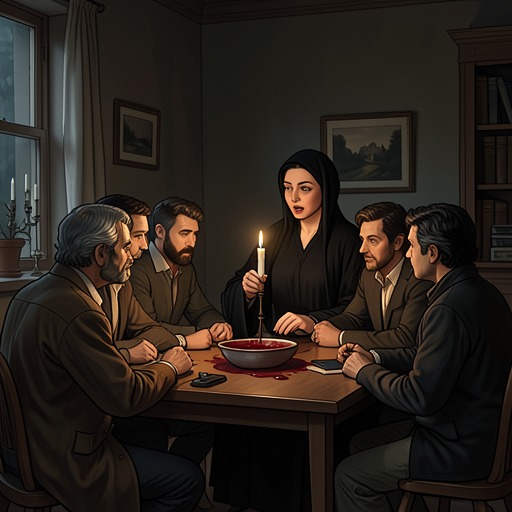
A protected participant describes sacrifice as a collective cycle governed by rules about the victim’s sex, age, and circumstances. The group was told that Inguma took a number of victims from the same sex and age group under identical conditions until the cycle was complete. The witness could not explain why sex mattered, but said that Tabese had presented the rule as established practice. This account gives the rite a repetitive structure: individual children are made to fit a predetermined pattern, and the promised benefits are used to make that pattern seem necessary to the group.
The testimony also exposes how the ritual’s obligations were distributed unequally. Men were generally the most committed, while some women struggled with the act even when they had agreed to it; after a sacrifice, the instruction was to have another child quickly. Some women, the witness says, did not know what their husbands intended, and some endured severe consequences. Having himself experienced the loss of a child, he recognizes that replacing the dead with another baby cannot erase the loss. The doctrine of repetition thus collides with the particularity of grief: the cult treats a child as an offering within a cycle, while the bereaved parent experiences the child as irreplaceable.
Evidence, Loss, and Aftermath
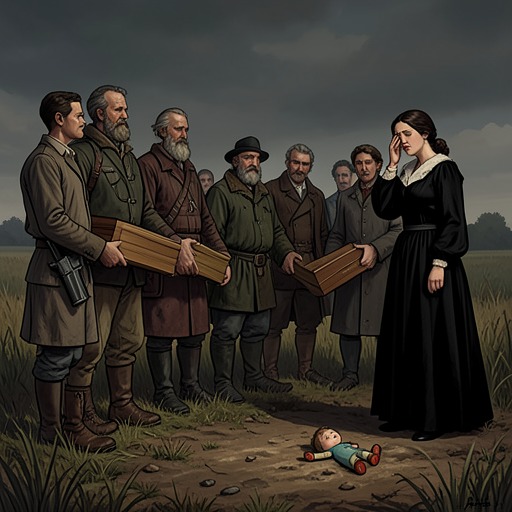
The investigation’s human consequences emerge most sharply through Yolanda Berrueta, whose repeated insistence that her children were not in their grave had been treated as a symptom of mental illness. A priest remembered that he had officiated at the funeral and watched the coffins lowered into the ground, yet Yolanda’s conviction was not simply a delusion: one child’s body was missing. She later acknowledges that confusion and medication had made her mistake the coffins, but insists that the discovery vindicates her and that, without her attempt to expose the truth, the missing child might never have been found. Her account also points toward another bereaved mother in Elizondo whose baby is missing. Against the cult’s logic of ritual cycles and replaceable offerings, Yolanda’s search insists on the individual child and the mother’s right to be heard.
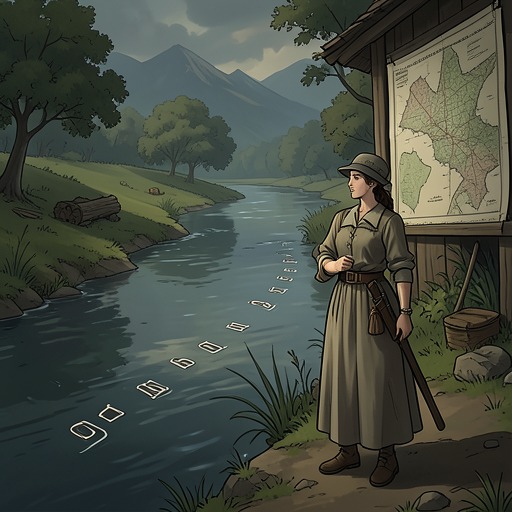
The novel also places the sacrifice investigation beside the separate murders of adolescent girls, whose bodies Amaia studies again in the case files. The killer had strangled them with a thin cord, carried them to the Baztán River, torn their clothes, shaved their pubic hair, parted their hair, and arranged their open hands with palms upward. Amaia reads the gestures as a forced return to childhood and an image of innocence offered up; a sweet replaced the sign of maturity, making the bodies part of a ritualized pattern. The scene echoes the cult’s investment in age, purity, and offering, but it remains an interpretation within Amaia’s investigation rather than proof that the girls were victims of the same sacrificial rite.
For Amaia, the danger was never theoretical: Berasategui and Rosario had prepared to kill her son. After the cult’s members are arrested, she returns to the emotional cost of the case, crying in Engrasi’s arms for fear, anger, regret, death, and the desecration of bones and blood until exhaustion overtakes her. The investigation’s final movement is practical as well as personal: she calls Elena Ochoa’s daughter to tell her that Elena did not die by suicide and that her letter helped stop the group responsible for killing children. Ritual child sacrifice is thus exposed not as an abstract belief system alone, but as a doctrine translated into murder, concealment, and bereavement—and as a pattern that can be interrupted when evidence is recognized and survivors are believed.